
The influencer marketing industry is heading past $40 billion in 2026. It’s also more crowded than it has ever been: the number of influencer agencies and providers grew from about 1,120 in 2019 to nearly 7,000 today. Every one of them is pitching the same brands. Here’s how one of them stopped waiting for referrals, with the real campaign data.
The client
EB Management is an influencer marketing agency that represents a roster of celebrity creators, talent with tens of millions of combined followers. Getting campaigns done was never their problem. Like most agencies in this space, the hard part was on the other side: getting in front of brands that actually spend on influencer campaigns, week after week, without depending on referrals or waiting for someone to find them.
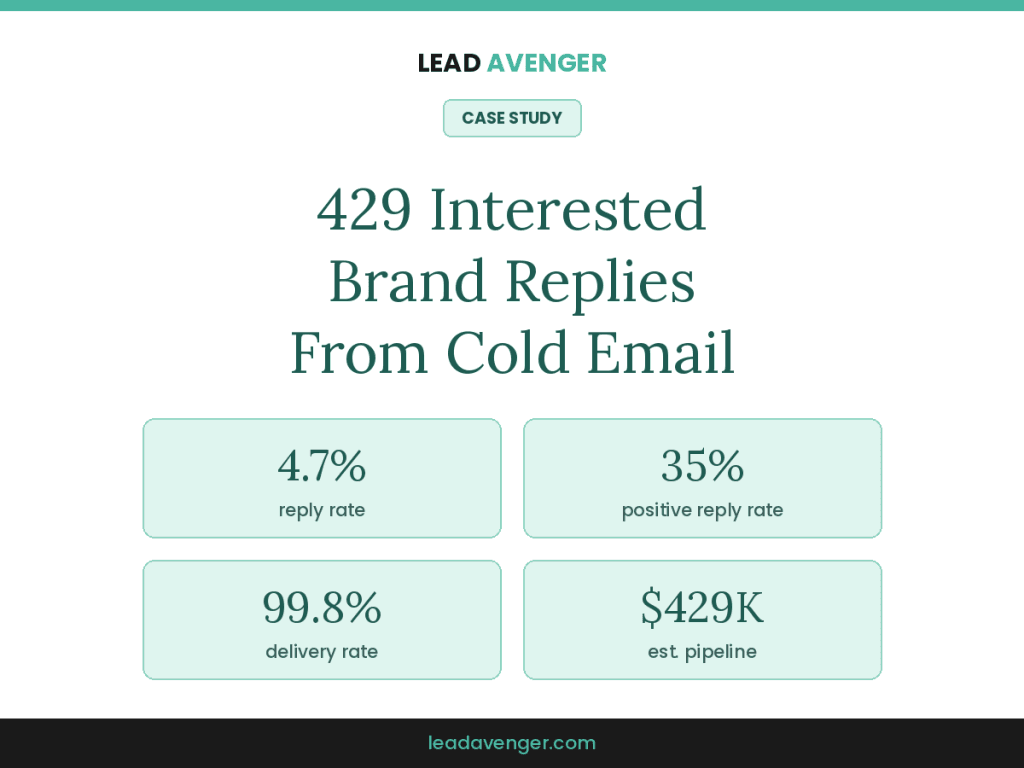
We ran their cold email for roughly four months. Seven campaigns, all aimed at the people inside brands who decide where the marketing money goes. Here’s what came back:
That’s a 4.7% reply rate, and 35% of all replies were real interest, not “unsubscribe,” not “who are you.” Brands asking about rates, availability, and campaign timelines. The pipeline number comes from the tracking tool’s estimated value per interested brand, so read it as potential deals on the table, not signed contracts.
How the campaigns were actually structured
The single biggest structural decision: one campaign per creator, not one campaign for the agency.
Most agencies pitch themselves. “We’re an influencer marketing agency, here’s our roster.” That email describes 7,000 companies and gives the brand homework: go figure out which creator fits.
Instead, every campaign led with one specific creator and was sent only to brands that made sense for that creator’s audience. The email wasn’t “work with our agency.” It was closer to “this specific creator fits your brand, here’s why, want the details?” That’s an email a brand manager can evaluate in ten seconds.
The second decision: split by geography
One creator had a big Latin American audience, so their campaign got a separate LATAM version, different brand list, copy adjusted for the market. That LATAM split became the single best campaign of the seven: 7,320 brands contacted, 297 replies, 116 interested, and $116K of the estimated pipeline on its own, the result now on our portfolio page.
Same creator, same agency, same offer. The only difference was matching the list to where the audience actually was. Targeting did the work.
The campaign-by-campaign numbers
| Campaign | Prospects | Replies | Interested | Interest rate of replies |
|---|---|---|---|---|
| Creator A, main campaign | 5,111 | 236 (5%) | 99 | 42% |
| Creator A, LATAM | 7,320 | 297 (4%) | 116 | 39% |
| Creator A, earlier round | 4,828 | 247 (5%) | 87 | 35% |
| Creator B, round 1 | 2,193 | 129 (6%) | 41 | 32% |
| Creator B, round 2 | 1,982 | 113 (6%) | 31 | 27% |
| Creator C, round 1 | 1,483 | 46 (3%) | 10 | 22% |
| Creator C, round 2 | 3,135 | 147 (5%) | 45 | 31% |
Two things worth noticing in that table. First, reply rates held between 3% and 6% across every campaign. That consistency is not luck. It comes from the deliverability setup underneath. Second, look at Creator C: round 1 managed a 3% reply rate and 22% interest. Instead of concluding “this creator doesn’t convert,” we rebuilt the list and adjusted the angle. Round 2 more than quadrupled the interested replies. The first version of a campaign is a draft, not a verdict.
What made it work
- The 99.8% delivery rate came first. Separate sending domains, warmed inboxes, verified lists, and controlled daily sending volume. The best-written email means nothing if it lands in spam, and this is where most do-it-yourself campaigns quietly die.
- Brand lists built per creator, not per agency. A brand selling energy drinks and a brand selling skincare should never be on the same list, even if both “do influencer marketing.”
- Replies filtered before they hit the client. EB Management didn’t wake up to 1,215 mixed replies. They got the 429 interested ones flagged and separated, so their time went into closing, not sorting.
- Volume held steady for four months. The pipeline didn’t come from one lucky blast. It came from roughly 6,500 prospects a month, every month, while the agency focused on delivery.
If you run an influencer agency and want to copy this
The parts you can take without hiring anyone:
- Pitch one creator per campaign, matched to brands that fit that creator’s audience. Never pitch “the agency.”
- Segment by geography when a creator’s audience concentrates somewhere. It produced the best campaign of the seven.
- Treat a weak first campaign as data. Rebuild the list and re-run before writing off a creator.
- Get the infrastructure right before anything goes out: separate domains, warmup, verified lists. The 99.8% delivery rate is the foundation every other number in this post sits on.
The takeaway
The influencer marketing industry will keep growing, and the number of agencies fighting for the same brands will grow faster. The agencies that win won’t just be the best at campaigns. They’ll be the ones whose pipeline doesn’t depend on referrals showing up.
If you want this system running for your agency without building it yourself, that’s what we do at Lead Avenger. See more results on our portfolio, or book a call and I’ll walk you through the exact list and campaign we’d build for your roster.
Written by Tawhid Islam, founder of Lead Avenger LLC. Connect on LinkedIn, Facebook, or message me directly on WhatsApp. Campaign data from EB Management’s ManyReach dashboard, campaigns run July to October 2024. Industry statistics from the Influencer Marketing Hub 2026 Benchmark Report and Grand View Research.